Friday, June 19, 2020

DOES GOD HAVE A NAME?


A lot of questions have been raised about God's name in the Internet. The Tetragrammaton יְהוָה has also been used in the same way as Transcendental Meditation, where one recites a mantra. 

       Allow me to ask another question. Does it even matter to God what His name is? 

       When we look at the burning bush incident, Moses asked God His name. 

Then Moses said to God, “Behold, I am going to the sons of Israel, and I will say to them, ‘The God of your fathers has sent me to you.’ Now they may say to me, ‘What is His name?’ (Exodus 3:13)

God told Moses (Exodus 3:14):

 וַיֹּאמֶר אֱלֹהִים אֶל־מֹשֶׁה אֶהְיֶה אֲשֶׁר אֶהְיֶה וַיֹּאמֶר כֹּה תֹאמַר לִבְנֵי יִשְׂרָאֵל אֶהְיֶה שְׁלָחַנִי אֲלֵיכֶם׃

          God said to Moses, “I AM WHO I AM”; and He said, “Thus you shall say to the sons of Israel, ‘I AM has sent me to you.’” 

אֶהְיֶה אֲשֶׁר אֶהְיֶה

          In Hebrew grammar, the word אֶהְיֶה (pronounced as 'eiyeh) is a yiqtol verb. It is not even a Proper Noun or a Name. It is what we call qal imperfect, a simple verb that is equivalent to the Continuous Tense in English. What this really means is: God is telling Moses that His existence is from eternity past to eternity future. He is always the I AM. 

          Notice that God did not even introduce His Name, but merely used these words to describe Himself to Moses. He then tells Moses (Exodus 3:15): 

15 וַיֹּאמֶר עוֹד אֱלֹהִים אֶל־מֹשֶׁה כֹּה־תֹאמַר אֶל־בְּנֵי יִשְׂרָאֵל יְהוָה אֱלֹהֵי אֲבֹתֵיכֶם אֱלֹהֵי אַבְרָהָם אֱלֹהֵי יִצְחָק וֵאלֹהֵי יַעֲקֹב שְׁלָחַנִי אֲלֵיכֶם זֶה־שְּׁמִי לְעֹלָם וְזֶה זִכְרִי לְדֹר דֹּר׃ 


Translated in NASB:  
"... the LORD, the God of their fathers, the God of Abraham, the God of Isaac, and the God of Jacob, has appeared to you.” He later repeated it in Exodus 4:5. 
        What does this tell us about God and the Name  יְהוָה, which is translated into English as "LORD" in capital? Did God even place any emphasis on the One Name or was He more interested in telling the people of Israel of His attributes and that He was the God worshipped by their patriarchs, Abraham, Isaac and Jacob? 

        In many other passages of the Bible, God reveals His name using words that describe His attributes. For example, 

יְהוָה אֵל עוֹלָם

El Olam (God Everlasting, Genesis 21:23)


        Archaeological findings reveal that El was, in fact, a generic word used for any god. It was also the name of the supreme god of the ancient Canaanite religion. Yet, our God was willing to use the word; He, however, differentiated Himself using His attributes: 

אֵל שַׁדַּי 
(El Shaddai meaning God Almighty Gen 17:1)

אֵל עֶלְיוֹן

(El Elyon, meaning God Most High, Gen 14:18)

צוּר
(Rock, Hab 1:12)

         We also know that the Messiah was going to be named, "Wonderful Counselor, Mighty God, Eternal Father, Prince of Peace." (Isaiah 9:6)

וַיִּקְרָא שְׁמוֹ פֶּלֶא יוֹעֵץ אֵל גִּבּוֹר אֲבִיעַד שַׂר־שָׁלוֹם׃

        I can go on quoting so many other names of God in the Bible, but the point is clear. God reveals Himself using different names on different occasions. But name that stands out is יְהוָה which simply means LORD or Adonai. 


        He is not concerned how we address Him. Archaeologists have even unearthed the existence of a cult that worshipped Yahweh and his consort, Asherah. However, the fact that Yahweh's name has been profaned by a cult did not mean that we cannot use the name Yahweh or Jehovah. 

        In fact, the name 'Jehovah' is as close as it could get when the German reformers such as Luther translated יְהוָה into German. The 'J' in German is equivalent and pronounced with a 'Y' sound in English. 

        Why then are we so gung ho about getting the name  יְהוָה correctly? Or whether it should be spelt as Jehovah, Yahweh or Yahvah? We all agree the tetragrammaton YHWH is often read out as just Adonai or Hashem, but we know this name refers to our God. 

        My question then is: Do we need to start changing the name 'God' into the Tetragrammaton YHWH (and some even say it is YHVH)? Absolutely not! I don't think we should go as far as trying to call Jesus, Yeshua or Yehoshua, as it does not matter whether to address Him by His Jewish name. The Name Jesus has been used for many centuries, and through this One Name, millions -- if not billions -- have been saved by grace through faith and miracles have been performed in this Name. If you are used to address His name as Adonai, by all means, use it but let's not go crazy overemphasing the use of Jewish names as though that these are the only correct names we should use to address our God or our Lord Jesus Jesus. 

        While we need to learn Hebrew and Greek so that we can read the Bible in the original languages, we should not read meanings into the Word; instead we should try to understand God's Word to see what it says. 

       I have written another article out of concern what is being taught in some circles about circumcision, something that I was told even the Messianic Congregations clearly reject. 


(If you have any concerns over flawed teachings that go beyond the Word of God, please email me Stephen.Ng.EJ@gmail.com) 


Friday, May 1, 2020

PLUG INTO A HEBREW CLASS OR WORSHIP SESSION effective 1 May 2020

Please use this very easy-to-remember link for frequent updates on what's available for you: 


To purchase this book, click on the book cover 


Thursday, April 23, 2020

PLUG INTO A HEBREW CLASS OR WORSHIP SESSION

WE HAVE MOVED TO 

tiny.cc/HebrewForYou3 

Click this link to go to the blogpost

Please use this very easy-to-remember link for frequent updates on what's available for you: 

 If the tiny.cc link above does not work, remember to change the number to 3, 4, 5, 6, etc until you can find a right link.  


To purchase this book, click on the book cover 


Friday, April 17, 2020

PRAISE THE LORD FOR THE SHOFAR


I urge all believers to put the shofar and the pursuit of Hebrew in the right place, and not to make the original languages of the Bible or the trumpet (shofar) appear too mystical. The shofar is nothing but a call to prayer and spiritual warfare while our learning of Hebrew / Greek is to help us understand (or exegete) God's Word better.


I bought this in Shenzhen, China some 25 years ago when I was on a work visit to our Union Carbide manufacturing plant there. It only cost me RMB 12. It has been collecting dust all these years.


Praise the Lord for the shofar.

It was used as a war-trumpet. A call to warfare. Joshua and the Israelites were told to use it at the final moments before the wall of Jericho came tumbling down. Humpty Dumpty who sat on the wall of Jericho could not be saved even by the king's horses and the king's men. That is how POWERFUL, not the shofar, but our GOD!

This is how sometimes I feel that we have forgotten our real focus is on the God of Abraham, Isaac and Jacob when we get hyped up about something new to us. The same with people who say that Hebrew is the heavenly tongue and God only speaks in Hebrew. My question is: Why did God use koine Greek for the New Testament then? Why not Hebrew all the way?

It is time that we put the shofar in its rightful place, as an instrument to call people to spiritual warfare, just as the שְׁמַע יִשְׂרָאֵל (Deut 6:4-6) is the call to the people of Israel to acknowledge that 'the LORD our God is one God.'

Apart from being a traditional trumpet, the shofar can be made of bronze or other metals. In word used in the New Testament Greek is σάλπιγξ. The New American Standard Bible even translates this as 'bugle' in 1 Cor 14:8. If there is any truth that the word 'shofar' has a ring of holiness to it, the word was unfortunately never used anywhere in the New Testament. The New Testament uses the word σάλπιγξ in its different cases for the war-trumpet. Let's look at this reference:

The trumpet (σάλπιγξ). Properly, a war-trumpet.

19. Sound of a trumpet (σάλπιγγος ἤχῳ). See Exodus 19:16, 19; 20:18. Ἦχος a noise, almost entirely in Luke and Acts. See Luke 4:37; Acts 2:2; comp. LXX, 1 Samuel 14:19. Of the roar of the waves, Luke 21:25; comp. LXX, Psalm 64:7; 76:17. A rumor or report, See on Luke 4:37, and comp. LXX, 1 Samuel 4:16; Psalm 9:6. It does not occur in the O.T. narrative of the giving of the law, where we have φωνή voice; see LXX, Exodus 19:13, 16, 19; 20:18. For φωνή σάλπιγγος voice of a trumpet in N.T., see Revelation 1:10; 4:1; 8:13. Σάλπιγξ is a war-trumpet.

In one session on the shofar that I attended, a sister shared that she would not use the shofar because it is too holy for her to use in her practice. She was rightly corrected by the shofar teacher that the Bible is also sacred, but it does not mean that one cannot use it for our Cell Group Bible Studies or we should use it only for some sacred ceremonies. Why then have we made the shofar so sacred that it cannot be used on other occasions? Who has been teaching such things and why have people become so gullible? 

In a same session, another shofar guru told the people that the shofar must not be overwhelming that it distracts the worship services. I have seen it before, when the shofar is blown at the right time and at the right place, it is a beautiful call for spiritual warfare.

I urge all believers to put the shofar and the pursuit of Hebrew in the right place, and not to hype up the original languages of the Bible or the trumpet (shofar) as though they are anything mystical. The shofar is nothing but a trumpet call to prayer and spiritual warfare while our learning of Hebrew / Greek is to help us understand (or exegete) God's Word better. You can use a bugle, a metal trumpet, but why just the shofar? Jesus never used the shofar to chase away evil spirits. 

Basically the shofar is nothing but a trumpet made of ram's horn. I have a question for all of you: If the word `shofar' is so sacred to God that He would hear no other trumpets except the shofar, then when the New Testament was written in koine Greek, why did the writers not preserve the word even in its transliterated form? 

Let us not get carried away although the marketing gimmick and start idolising the shofar.

It is fine for us to have a session where everyone blows the shofar and practise together, but our main focus should always be as what Jesus said: "Seek first the kingdom of God and His righteousness..." (Matthew 6:33a)


Other References: 


TDNT (Little Kittle):
A. The Greek World.

I. Meaning.

1. sálpinx. This word denotes a wind instrument, made of bronze or iron with a mouthpiece of horn, and broadening out to a megaphone, i.e., a “trumpet.” The word may also denote the sound made by the instrument, its signal or playing. Other uses are for thunder as a heavenly trumpet sound or for a human speaker as a trumpet.

2. salpízō. This word means “to blow on a trumpet,” “to give a trumpet blast or signal,” “to blow on an instrument,” “to thunder.”

3. salpistḗs. This is one form of the word for “trumpeter.”

II. Origin and Use.

1. Origin. Trumpets are used from an early date in the Near East (cf. the Persians, Hittites, and Egyptians). The Greeks know them from the time of Homer but not at first as military instruments.

2. The War Trumpet. The trumpet soon finds use in the army for giving signals. It replaces the earlier Spartan flute and Cretan lyre. It passes on signals, fires with courage, terrifies enemies, signals retreat, rallies the scattered, ends battles. In the Roman camp it gives the signal for sleeping, watching, and waking.

3. The Trumpet in Peace. Shepherds use trumpets to gather their flocks. Heralds initiate trials by trumpet sounds. Trumpets silence the people for prayer or summon them to sacrifice. Trumpeters have a place in funerals and triumphs. Trumpet competitions are part of the games. Only a few notes can be played but trumpet playing is an art in view of the strong lungs that it requires.

4. A Musical Instrument. It is doubtful whether the trumpet has much of a role as a musical instrument. The Egyptian trumpets have only two notes. They may give signals and set rhythms but not play real music. Trumpets have a loud and penetrating sound that is sometimes compared to the braying of an ass or roaring of a bull.

B. The OT.

1. Hebrew Equivalents.

1. sálpinx. This word is most often used for a Hebrew term that is better translated as a ram’s horn or a horn in general. Trumpet is a more accurate rendering in the case of the cultic instruments of Num. 10:21; 2 Kgs. 11:14; 2 Chr. 5:12-13. This superior instrument then tends to supplant the ram’s horn and has an important place in priestly ministry (2 Chr. 29:26ff.). The instrument of Josh. 6:5 seems to be an animal horn; it has a place in Nebuchadnezzar’s “orchestra” in Daniel. Another word used in Gen. 4:21 has various senses, e.g., horn, trumpet, signal, or the feast announced by such a signal; it means “horn” in Ex. 19:19, but in Josh. 6:4ff. it denotes, not an instrument, but the material of which the instruments are made. In Lev. 23:24 sálpinx is used for a word that really means “noise” (Josh. 6:5) of “alarm” (Num. 10:5). The true reference in Ezek. 7:14 seems to be to blowing rather than to an instrument.

2. salpízō. This word is used for various Hebrew terms in such senses as “to blow an alarm,” “to cry,” “to draw out a note,” “to sound.”

3. salpistḗs. This noun does not occur in the OT, which has no special term for those who blow trumpets, e.g., priests in 2 Chr. 29:26; Ezr. 3:10. (For details of the Hebrew terms see TDNT, VII, 76-78.)

{p. 998}

II. Use and Significance.

1. In War. Horns or trumpets play an important role in war, whether to give warning, to summon to battle, to sound an attack, to frighten enemies, or, religiously, to invoke God’s help. The horn also sounds a retreat, announces victory, and dismisses the host.

2. In Peace. Horns or trumpets are used at coronations, at the laying of the temple’s foundation, at its dedication, in festal processions, and in solemn self-dedication to God.

3. Cultic Use. The trumpet or horn is sounded at offerings, at the temple dedication, at feasts, at fasts, and at the initiation of the year of release.

4. Theophanies. In both war and peace there is a strict relation to God, but there is a special use of the trumpet at Sinai (Ex. 19:16ff.; cf. Zech. 9:14), where the trumpet seems to denote the inexpressible voice of God.

5. Eschatological Significance. The horn will announce the day of the Lord (Joel 2:1; Zeph. 1:16), the last judgment, and the age of salvation (Is. 27:13; Zeph. 9:14).

6. Musical Instruments. The horn or trumpet is a musical instrument in Babylon in Dan. 3:5ff. and in temple praise in 2 Chr. 5:13; Ps. 150:3. Horns and trumpets do not play melodies but stress the rhythm and strengthen the sound.

Vincent’s Word Studies in NT (Greek Content)

8. The trumpet (σάλπιγξ). Properly, a war-trumpet.


19. Sound of a trumpet (σάλπιγγος ἤχῳ). See Exodus 19:16, 19; 20:18. Ἦχος a noise, almost entirely in Luke and Acts. See Luke 4:37; Acts 2:2; comp. LXX, 1 Samuel 14:19. Of the roar of the waves, Luke 21:25; comp. LXX, Psalm 64:7; 76:17. A rumor or report, See on Luke 4:37, and comp. LXX, 1 Samuel 4:16; Psalm 9:6. It does not occur in the O.T. narrative of the giving of the law, where we have φωνή voice; see LXX, Exodus 19:13, 16, 19; 20:18. For φωνή σάλπιγγος voice of a trumpet in N.T., see Revelation 1:10; 4:1; 8:13. Σάλπιγξ is a war-trumpet.


Sunday, April 12, 2020

THE POWER OF THIS YIQTOL VERB אֶהְיֶה


Three Lessons from the Burning Bush | One Year Challenge
Source of photograph: https://oneyearchallengeblog.org/2017/09/05/3-lessons-from-the-burning-bush/

THE POWER OF THIS YIQTOL VERB אֶהְיֶה


וַיֹּאמֶר אֱלֹהִים אֶל־מֹשֶׁה אֶהְיֶה אֲשֶׁר אֶהְיֶה וַיֹּאמֶר כֹּה תֹאמַר לִבְנֵי יִשְׂרָאֵל אֶהְיֶה שְׁלָחַנִי אֲלֵיכֶם׃

Exodus 3:14 God said to Moses, “I AM WHO I AM”; and He said, “Thus you shall say to the sons of Israel, ‘I AM has sent me to you.’”


In my earlier post, I mentioned that it is important for us to learn the Hebrew grammar if we want to do a proper exegesis of the Bible. 

Here, I give an example where I get a better insight into the Hebrew text: 

In the Hebrew text, we see God using the Yiqtol or Qal Imperfect verb אֶהְיֶה (pronounced as 'eiyeh' and often translated as 'I AM') to tell Moses who He is. He did not even use a proper noun or a Name as one would expect, but He simply told Moses about His existence.

There is a lot of insight packed into just this one word after you understand the grammar behind it.

*  *  *
First, allow me to explain: Hebrew tenses are not like English, which has past, present and future tenses to tells us the time of an action. Instead, in Hebrew, the emphasis is always on whether it is a Perfective or Imperfective Tense.

Imagine my father is reading the newspapers in the living room. If I take a video of him reading the newspapers, you will see the action of reading the newspaper as a continuous (on-going or imperfective) action. But if I captured his action of reading the newspaper and show it to you as a photograph, it will tell you this is a completed (or perfective) action.

Unlike the past, present and future tenses in English which gives us a sense of time when the action was, is or will be done, the perfective tense in Hebrew does not tell us when my father read the newspaper but that he completed the action of reading the newspaper. You don't see him doing it, or still doing it. It is a completed action. The photograph 'froze' his action.

In short, whereas the photograph tells you that he read (completed action) the newspapers, the video shows you that he is reading (continuous action) the newspapers. In Hebrew, we call the completed action as the Qatal verb; the continuous action is the Yiqtol verb.

*  *  *
Moving forward, we now look at the meaning of this one word, אֶהְיֶה


Meaning of 
אֶהְיֶה
The word אֶהְיֶה is a combination of two parts -- the pronominal prefix and the root word.

We know that this is a Yiqtol verb when אֶ is used as a pronominal prefix. The prefix אֶ tells us that the subject of the verb is the First Person Common Singular pronoun, or 'I', in short. God was referring to Himself as 'I' instead of 'We'.

I will now change the colour of the font for אֶ and put it in the background so that you can now see the root word (in purple) of the Yiqtol verb,  אֶהְיֶה.
  • Strong's Hebrew Dictionary defines the root word הָיָה hayah as a primitive root; meaning 'to exist', i.e. be or become, come to pass (always emphatic, and not a mere copula or auxiliary):—beacon, x altogether, be(-come), accomplished, committed, like), break, cause, come (to pass), do, faint, fall, + follow, happen, x have, last, pertain, quit (one-)self, require, x use.
  • אֶהְיֶה, being a Yiqtol (or imperfective) verb, we can now translate it in our own words, as: "I am in a continuous existence. I am not bound by time or space." This is why we see how this is sometimes translated elsewhere as, "I was, I am and I will be..."
This is a wonderful insight, indeed! It did not occur to me until last night.

Instead of just translating it as "I AM WHO I AM...," as though God was trying to tell Moses, in the same manner that we would tell people, "You just take me for who or what I am," now, I see God using the yiqtol (or imperfective) verb to describe Himself as being in a state of continuous existence.

Every created thing or being has a beginning, but here, the yiqtol verb tells us that it is not even correct to say that God was there 'right from the beginning'. With God, there is no 'beginning' but a continuous existence both before and beyond what we know as Time. In short, God told Moses that there are three dimensions to His existence:
  • He was already there before the beginning of Time or creation (eternity past);
  • He is also here (now and present);
  • He will be with us after the end of Time (eternity future)
His existence is from eternity past to eternity future!

This is a wonderful answer to people who ask, "Is there a God?" The next time this question is asked, I will refer to this verse and explain these three words, אֶהְיֶה אֲשֶׁר אֶהְיֶה .


-----------------------------------------------------------------------
Read why you need to spend time learning the proper Hebrew Grammar instead of just depending on some transliteration that you commit to memory without even understanding the way how the language works.


Saturday, April 11, 2020

WHY STUDY HEBREW GRAMMAR?


I have been asked many times by Christians who want to learn Hebrew but they don't want to spend time studying the grammar.

Let me give you an illustration why learning the grammar is important even in English.

Let's say I have a friend who tells me,

"Stephen, I am coming to your house yesterday."

I can interpret it as, "Wow! Great! I will cook you a meal! What would you like to eat this time?"

Not knowing that he meant, "I came to your house yesterday" and because of that, he is not planning another visit to my house.

How has the grammar helped him and you to communicate? It would lead to miscommunication, misinterpretation and a lot of frustrations, wouldn't it? What if I had prepared a whole banquet for you thinking that he will be coming to my house?

That's why, if proper grammar is necessary, a good understanding of Hebrew grammar is also very important!

*   *   *   *   *

So, my explanation is simple:
  • Why do you study English grammar?
  • Why is it important for you to know how to differentiate the tenses. For example
    • "I will buy the food today" is the future tense
    • "I have already bought a lot of food" means you have done the action. 
  • What about words like 'broke' or 'shattered'? Which word gives you a stronger intensity? For example, 
    • "The glass broke when it fell on the floor."
    • "The glass was shattered into pieces!" 
  • Your girlfriend tells you, "I am going to cook for you on Sunday". Today is Monday. Do you turn up in her house just because you heard her saying, "cook for you"? 
When you want to get the most out of your Hebrew Old Testament or Greek New Testament, you need to know the basic grammar first before you can do a good job at your exegesis. 

A sister-in-Christ once remarked that the Hebrew word for prayer is a hithpael. She was enthusiastic to share with me. "God used the hithpael form of the word because it is a very intensive and reflexive action between two parties involved in a believer's prayer. God speaks to the believer just as much as the believer speaks to God."

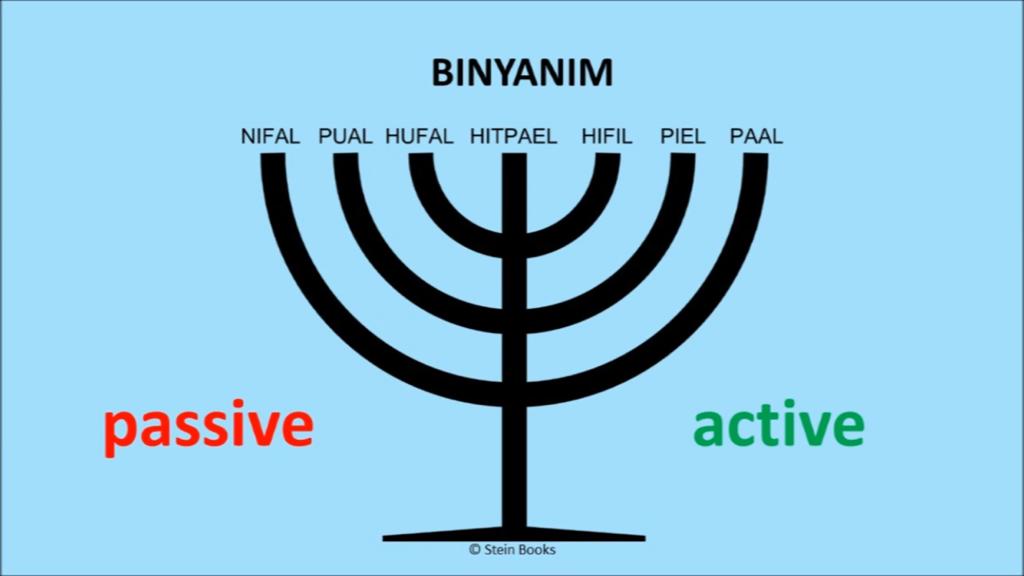
There you go! That's the basic Hebrew grammar. Hithpael is one of the verbal stems of Hebrew verbs or the binyanim. There are seven binyanim, which represents two dimension: the Voice (either active or passive) and the intensity of relationship whether it involves one or more parties (hence, the difference in the English words that we know as 'write', 'dictate' and 'correspond'.

Without understanding the basic grammar, how can anyone truly study the Hebrew Bible and be inspired by the word of God itself? There are so many things that I can share which will amaze you as I continue to study the language and applying it in my reading of Scriptures.

I hope you see the importance of learning the basic Hebrew (and Greek) grammar so that you can do your Bible studies in the original languages. With basic Hebrew grammar, great scholars have been able to discover new insights and write books that impacted many lives. For this reason, I encourage people to plug into a seminary-level Hebrew course. Read this.


Tuesday, March 31, 2020

NO SHORTCUTS TO LEARNING A LANGUAGE


In learning a language (for me, Hebrew, and now Greek), I realise the importance of a step-by-step process:

1) Learn the Consonants and Niqquod so that you can start reading words in Hebrew.

2) Learn the language proper (grammar, syntax, etc) so that you do not read too much meaning into the words. In Hebrew, you have the various forms of qal (verbs) such as the qatal, yigtol, weqatal and wayyigtol. These are the tenses. Within each category of the verbs, you have the verb stems (or the binyanim) such as paal, niphal, piel, pual, hifil, hufal and hitpael. They tell you the voice of the verb (active or passive)  and the intensity of relationship.


In English we have three different words to describe the same thing. 'Dictate' and 'correspond' is basically writing. However, in Hebrew, we do not use different words like in English. In Hebrew, we use only one root word and from there, construct the different words that we want to describe the action.
The paal form of the verb (e.g. to write) involves only one person; the hifil form of writing involves two person (one person reads out, the other person writes); the hitpael form involves greater intensity in relationship (meaning, I write to you, and you write back to me, then I write to you again). 

3) With proper tools, like a lexicon, you search out the meanings of words. You will gain a lot more insights when you do word study. For example יִתְלוֹנָן in Ps 91:1 is more than just 'abide'. It means 'staying overnight for your safety sake'

4) You will also find that the same word תֵּבַת גֹּמֶא is used in Ex 2:3 (read the explanation below from Israel Institute of Biblical Studies) is used to describe Noah's ark תֵּבָה (Gen 6:3). The question arises, why not סַּל (translated as basket in Gen 40:17)? From your study of Hebrew grammar, you will also find that the words תֵּבַת is a construct form of תֵּבָה. This will keep you from making all sorts of guesses that perhaps, ת in תֵּבַת might have a special link to God since He is the א ת. This may gradually lead to other forms of cult practices.

There is no way we can shortcut our learning of Hebrew (or Greek) if we want to do proper exegesis of Scriptures.

I am sure Hebrew scholars have spent countless of hours going through all the above steps. Even the lexicons are produced by scholars who have done careful study of the Scriptures to gain a full knowledge of the text.

Never shortcut your learning but take it one step at a time and make this an exciting journey


--------------------------------------------------------------------------
Credit mention: Israel Institute of Biblical Studies 

Exodus in Genesis


The story of Abram and Sarai’s sojourn in Egypt (Gen. 12:10–13:2), is not only about Abram and Sarai: it foreshadows the Exodus of Israel that would happen 400 years later. In both accounts, we find a descent to Egypt as a result of “heavy famine”; plagues upon the Egyptians and expulsion from Egypt because of the plagues; and the departure from Egypt with great richesץ


Redeemer in the Ark

Any English reader knows that Noah and his family were saved in the Ark – tevah in Hebrew. Surprisingly, we find the same word, tevah, in the story of Moses: baby Moses was put into the ark. Why would the Torah use the word “ark” here, instead of the common Hebrew word for basket? The answer is clear: to make an intentional link between the two stories—Noah prefigures Moses’ role as Israel’s redeemer.


Discover New layers in the Scripture
Just as Abram’s descent to Egypt and Noah’s rescue from the Flood foreshadow later events, there are many more stories like these in the Torah. But how can we find them? While a shared plot can also be seen in translation, shared words and phrases can only be discovered in the Hebrew text. Enroll in our course Discovering the Hebrew Bible – and you will indeed discover completely new layers in the Scriptures.


The Link between the Lord's Supper and the Passover feast, as explained by Amir Tsafarti

  This is one of the best explanations of the Passover feast I’ve heard—from a Messianic Jew and true brother in Christ!           Amir’s te...